


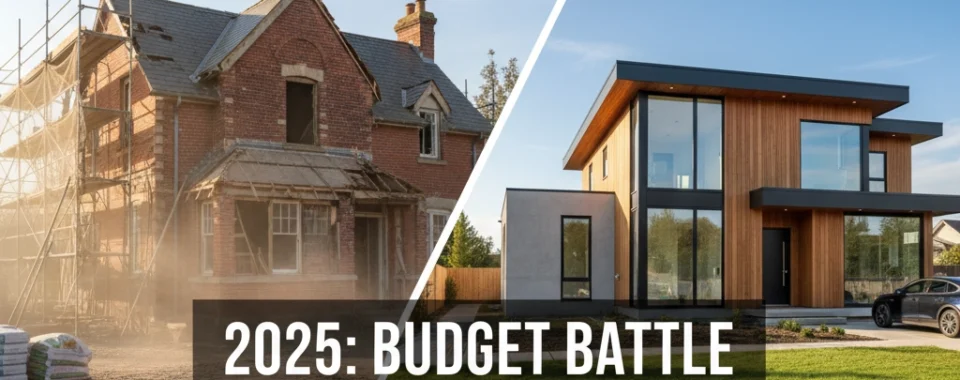
The decision between renovating your existing property or building new remains one of the most significant financial choices Australian property owners face in 2025. With construction costs continuing to fluctuate and building materials experiencing ongoing price volatility, understanding the true budget implications of each path has never been more critical.
Both renovation and new construction offer distinct financial advantages, but the better choice for your budget depends on several key factors including your current property's condition, your long-term goals, and your available capital. Let's examine the comprehensive cost structures and financial implications of each approach.
Understanding the True Cost of Renovation Projects
Renovation projects often appear more budget-friendly at first glance, but the reality involves complex cost considerations that extend beyond initial estimates. Whole-house renovations typically range from $100 to $200 per square foot, with targeted improvements starting as low as $15 per square foot for basic updates.
The permit and approval process for renovations generally requires $3,000 to $5,000 in fees, significantly lower than new construction requirements. However, renovation projects carry inherent financial risks through unexpected discoveries. When contractors remove walls, flooring, or roofing materials, they frequently uncover issues requiring immediate attention: from outdated electrical systems to structural damage or plumbing problems that don't meet current building codes.

These unexpected expenses typically account for 10 to 20 percent of your total renovation budget. Property owners should establish contingency funds accordingly, as renovation timelines can extend significantly when addressing unforeseen complications. Additionally, living in a construction zone often necessitates temporary accommodation costs that many homeowners overlook in initial budget calculations.
New Construction Cost Structure and Considerations
New construction projects involve substantially higher upfront investments but offer greater cost predictability throughout the building process. Construction costs range from $150 to $400 per square foot, with current market conditions placing most projects around $150 to $200 per square foot for standard residential builds.
Land acquisition represents the largest variable in new construction budgets, ranging from $1,000,000 to $3,000,000 depending on location, size, and zoning requirements. Permit fees and council approvals typically require $15,000 to $30,000, though this investment provides comprehensive building approvals and inspections throughout the construction process.
The key financial advantage of new construction lies in predictability: unexpected expenses generally account for only 5 to 10 percent of the total budget. Modern building practices, detailed architectural plans, and standardized construction methods significantly reduce the likelihood of major cost overruns compared to renovation projects.
Comparative Financial Analysis
When evaluating renovation versus new construction from a pure budget perspective, consider these financial benchmarks:
Initial Investment Requirements:
- Renovation projects require lower upfront capital but demand larger contingency reserves
- New construction requires substantial initial investment but offers more predictable total costs
- If you already own suitable land, new construction costs typically range from $365,935 to $449,000 for median-sized homes
- Renovation costs vary dramatically based on existing property condition and scope of improvements
Operating Cost Implications:
New construction delivers superior long-term financial performance through reduced maintenance requirements and enhanced energy efficiency. Modern building materials, insulation standards, and mechanical systems typically result in 20 to 30 percent lower utility costs compared to renovated properties. Additionally, new homes require minimal maintenance for the first decade, while renovated properties often require ongoing repairs and updates to aging components not addressed during renovation.

Property Value Considerations:
Both approaches can increase property value, though through different mechanisms. Renovations that cost less than 50 percent of the property's current market value typically provide positive returns on investment. However, extensive renovations approaching or exceeding 50 percent of market value often indicate that new construction would deliver better financial outcomes.
New construction generally provides higher resale values due to modern systems, energy efficiency, and customization options that appeal to contemporary buyers. Properties built to current standards also avoid the stigma some buyers associate with extensively renovated older homes.
Strategic Recommendations for Different Budget Scenarios
Choose Renovation When:
Your existing property has solid structural foundations and major systems (electrical, plumbing, HVAC) that meet current standards. Renovation makes financial sense when improvements focus on aesthetics, layout modifications, or targeted updates rather than comprehensive overhauls.
Consider renovation if you're working with constrained capital and can complete improvements in phases over several years. This approach allows you to spread costs while maintaining occupancy, though it requires careful planning to ensure each phase adds value without creating temporary inconveniences.
Renovation suits property owners in established neighborhoods where land values support the investment but new construction would over-capitalize for the area. Historic properties or homes with unique architectural features often benefit more from thoughtful renovation than replacement.
Opt for New Construction When:
You already own suitable land, eliminating the substantial acquisition costs that often make new construction prohibitive. Land ownership fundamentally changes the financial equation, making new construction competitive with major renovation projects.
Choose new construction when your existing property requires extensive structural, electrical, or plumbing updates. If renovation estimates approach 50 percent of your property's current value, new construction typically delivers better long-term financial returns through reduced maintenance costs and higher resale values.

New construction suits property owners with access to sufficient capital and desire for predictable costs and timelines. While the initial investment is substantial, the controlled construction environment reduces the likelihood of budget overruns that frequently plague renovation projects.
Market Conditions and Timing Considerations
The 2025 construction market presents unique opportunities and challenges for both renovation and new construction projects. Material costs have stabilized following recent volatility, though skilled labor remains at premium pricing across both renovation and new construction sectors.
Current market conditions favor property owners who can commit to definitive timelines and budgets. Contractors increasingly prefer projects with clear scope definitions and adequate contingency funding, making new construction more attractive from a contractor selection perspective.
Interest rate environments also influence the renovation versus new construction decision. Higher borrowing costs impact construction loans differently than renovation financing, requiring careful evaluation of funding options and their total cost implications.
Making the Financial Decision
The choice between renovation and new construction ultimately depends on your specific financial situation, property condition, and long-term objectives. Renovation offers lower barrier to entry but requires larger contingency reserves and often delivers less predictable outcomes. New construction demands substantial upfront investment but provides greater cost certainty and superior long-term value.
Professional consultation becomes essential for making informed decisions. Qualified contractors can assess your existing property's renovation potential and provide realistic cost estimates, while experienced builders can evaluate new construction feasibility and provide comprehensive project budgets.
At Celestial Structures, we provide comprehensive consultation for both renovation and new construction projects, helping property owners navigate these complex financial decisions with confidence. Our experience across both sectors enables us to provide objective analysis of your options and deliver exceptional results regardless of the path you choose.
The key to budget success lies in thorough planning, realistic contingency reserves, and working with experienced professionals who understand the unique financial considerations of Australian construction markets.


